

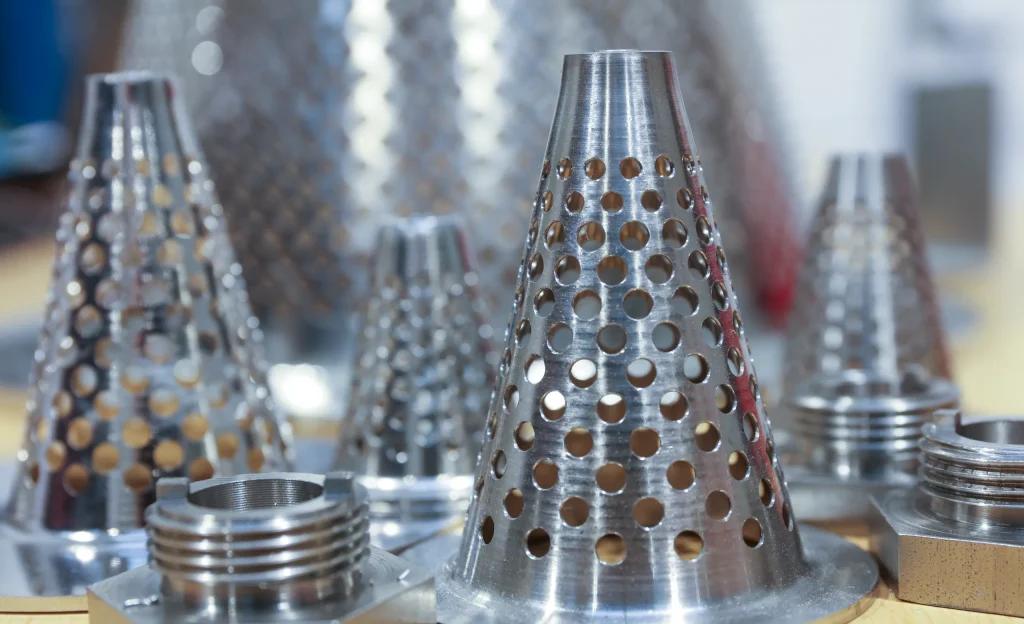
Most pipeline systems require some form of check valve device to maintain flow in one direction to prevent either contamination of liquids already in the system or damage to the pipework and its ancillary components. Quite a simple function you might think! Experience however tells us a different story.
Check valve features
- Tight shut off under minimum back pressure.
- Quick response to no-flow or reverse flow conditions.
- Low resistance to forward flow.
- Lightweight construction.
- Ease of installation with unskilled operators.
- No maintenance.
- It is a stop silent valve.
- It stops the reverse flow and is completely silent in its operation, preventing “water hammer”.
More benefits
- It is extremely simple.
- It operates in any direction, vertically up or down, or horizontal.
- High material specification – 316 stainless steel.
- Less noise due to slamming shut under reverse flow.
- Can be incorporated in a variety of body configurations or simply built into original equipment as a cone and diaphragm assembly.
Check valve method of operation
Flow takes place in the direction of the arrows under forward and reverse flow.
- A – Check Valve Open
- B – Check Valve Closed
- C – Check Valve Diaphragm
- D – Check Valve Cone
With flow in the forward direction the diaphragm deflects inwards (A) allowing easy passage of the liquid with little pressure loss. When a no flow, or back pressure, condition occurs the diaphragm returns to its relaxed position (B) sealing off all flow in the reverse direction.
This action is unaffected by the orientation of the Norval Non Return Check Valve.
Stop Silent is a registered trademark of Northvale Korting.
Valve types
Northvale Korting offers the Norval non-return check valve in a range of body types and sizes. Additionally, different body materials are available including bronze, cast iron, fabricated steel and 316 stainless steel. In order to meet your application requirements, a selection of fitting connections are available, including flanged, screwed and RJT or IDF connections.
Valve specifications
Frequency of operation. When selecting Norval check valves particular attention should be given to the period that the valve will remain in the open position without a flow reversal taking place.
The elastic memory of the diaphragm is time dependant and, if left open for long periods, may result in slow closure of the valve under reverse flow with subsequent leakage.
The degree of diaphragm deformation is a function of the service, temperature and material. Unlike conventional check valves, the more arduous and frequent the operating cycle the better Norval works.
Velocity limitations. Liquids – Norval check valves are designed for maximum continuous liquid velocities of 3m/sec with intermittent peak velocities up to 3.6m/sec. Where velocity conditions exceed these maximums you are recommended to fit a larger valve.
Gas and compressed air – since Norval is essentially a liquid services check valve you should consult our technical department before considering for gas and air applications.
Hydrants
- Pressure Reducing Valves
- Strainers
- Butterfly Valves
- Flow Regulators
- Manifolds
- Din Valves
- Ansi Valves
- Bellow Steam Seals
- Low Noise Trims
- Valve Repairs